Topic pages: one approach for SEO and GEO
Your website is full of valuable information, but how do you make sure visitors, search engines and AI systems can easily find it? Topic pages can help. By bringing together relevant content around a specific subject, you make your website easier to navigate. As a result, you also create more opportunities for online visibility.
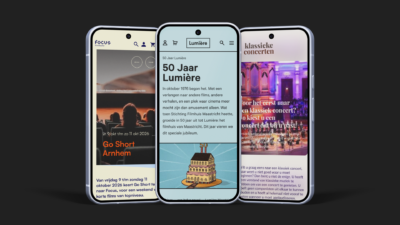
A well-structured topic page can strengthen both SEO and GEO. But how exactly does that work? And how do you create a topic page that makes the most of these opportunities?
Why are topic pages good for SEO?
SEO (Search Engine Optimisation) focuses on improving your website’s visibility in search engines such as Google and DuckDuckGo. A topic page brings together relevant information about a particular subject. In addition, it links to more in-depth content on your website. This can benefit your SEO in several ways:
- Stronger topical relevance and expertise: by grouping and interlinking articles about a particular subject, you demonstrate the knowledge and information your website offers on that topic.
- Better internal linking: a topic page links to relevant articles and vice versa. As a result, search engines can more easily discover related content and understand how different pages connect.
- Visibility for broader search terms: individual articles often target specific search queries, while a topic page can also target broader keywords.
- Improved user experience: visitors get a clear overview of relevant information and can easily explore more detailed content.
Example: putting Rotterdam talent in the spotlight
A great example is the Rotterdams Talent topic page by Luxor Theater, which brings together performances and events featuring Rotterdam talent in one clear overview.
This makes it easier for visitors interested in local talent to discover relevant performances and events. At the same time, the topic gets its own dedicated place on the website. This allows Luxor to highlight connections between different performances.
This creates opportunities for SEO: the page can match relevant searches related to Rotterdam talent, while visitors can easily navigate to performances that match their interests.
Why are topic pages good for GEO?
GEO (Generative Engine Optimisation) focuses on the visibility of your organisation and content in AI-powered search environments, such as ChatGPT, Claude, Perplexity and Google’s AI features.
SEO focuses on visibility in search results and driving traffic to your website. In contrast, GEO also aims to increase the likelihood of AI systems using your information or mentioning your organisation in their responses.
A topic page can contribute to this by:
- Providing clear context: a topic page shows which subjects your website covers and how different pieces of content relate to each other.
- Demonstrating expertise: a well-developed topic page with links to in-depth articles, real-world examples and original insights can help establish your organisation’s expertise.
Providing specific answers: by clearly answering frequently asked questions, you offer information that AI systems may use when generating responses. - Structuring information logically: clear headings, definitions, summaries and internal links make content easier to navigate and help systems interpret information.
Example: answering questions about classical concerts
Imagine asking an AI assistant: ‘I’m going to a classical concert for the first time. What should I know?’
The Tips for your first classical concert page by Beleef Klassiek provides exactly the kind of information that could help answer this question. It offers practical advice on what to wear, concert etiquette and what to expect during a classical performance.
Because the information is clearly organised and answers specific questions, it could be useful to AI systems. However, there is no guarantee that AI systems will actually use or reference the page. Moreover, the direct impact of topic pages on GEO is less well established than the SEO benefits of well-structured content.
A topic page is more than a collection of links
So, how do you go about creating a topic page?
- Option A: you create a page with a short introduction, followed by a collection of links to related articles.
- Option B: you create an informative page explaining what the topic is, why it matters and which questions or challenges are associated with it. You also link to relevant articles, examples and additional information.
Which approach works best depends on the purpose of your page. For example, a clear overview page can work perfectly well if you want visitors to discover relevant events, services or other offerings.
However, if you also want to answer specific questions and demonstrate your expertise, a more comprehensive topic page offers additional opportunities. This can benefit both SEO and GEO. Ultimately, your topic page should meet the needs of your target audience.
How to create a topic page for SEO and GEO
SEO and GEO largely share the same foundations: valuable, reliable and well-structured content. Therefore, we recommend combining both approaches when developing topic pages.
A good topic page:
- focuses on one clearly defined subject. Choose a topic that is relevant to your target audience and aligns with your organisation’s expertise or offerings.
- answers important questions independently. Make sure visitors can find valuable information directly on the page, without having to click through to other content first.
- links to relevant in-depth content. Think of articles, event listings, case studies or other pages related to the subject.
- has a logical structure. Use clear subheadings, well-organised paragraphs and, where relevant, bullet points or frequently asked questions.
- includes original insights and practical experience. Unique knowledge, specific examples and reliable information make your content more valuable than a general summary of information already available elsewhere.
- is technically accessible. Make sure search engines and relevant AI systems can access and process the information.
- is regularly updated. Check that the information is still accurate, add relevant developments and keep links to other content up to date.
The greatest value lies in combining these elements: you make your website easier to navigate for visitors, easier to understand for search engines and potentially more useful as an information source for AI systems.
Which topics deserve their own place on your website?
Traditional SEO often focuses on the search volume of relevant keywords. With the rise of AI-powered search, it can also be worthwhile to develop topic pages around subjects with relatively low search volumes, but which generate specific or complex questions from your target audience.
That’s why it’s important to look beyond keywords alone. What questions does your audience have? And which subjects does your organisation have valuable knowledge about that isn’t yet sufficiently visible online?
A good topic page doesn’t start with technology, but with content and the needs of your target audience.
Marketing & analytics
At Eagerly, we combine creative ideas with in-depth analysis to increase engagement and conversions.
Read moreStrategy & research
Whether you're exploring new markets, strengthening your brand or improving the visitor experience, we understand that your needs are unique.
Read more
Co-founder
Curious about the opportunities topic pages could offer your website?
At Eagerly, we'd be happy to help you develop a smart content structure, identify relevant topics and implement the right technical solutions to strengthen your online visibility.
Make an appointment EmailRead more:

Afterpages: a visit doesn’t end at the exit
An afterpage offers visitors something extra after their visit, with the potential to boost conversions and audience engagement.

Algolia: Improve your website’s search functionality
With excellent search functionalities like typo-tolerance, synonym recognition, and autocomplete, users can find relevant information faster with Algolia.